Rameau is known to piano students through a handful of his harpsichord pieces. Many moons ago when I used to teach piano I delighted in introducing young ears to the vertiginous side-stepping harmonies of his L’enharmoniqueand the witty clucking of his La poule. His works for keyboard and chamber ensemble are still the mainstay of his profile in Ireland, though anyone seriously interested in the theory of music will probably also have explored the writings which caused him to be dubbed “the Newton of music”. His perspective has held sway for hundreds of years.
The concert with Kozena and Haim was part of the National Concert Hall’s current International Concert Series and the printed programme’s introductory note by the hall’s chief executive Simon Taylor highlighted the fact that music by composers of the French Baroque “is far less widely performed than that of their German and Italian contemporaries such as Bach, Handel and Vivaldi”. Rameau’s profile at the NCH has been limited. I’ve only been able to trace a single pre-2018 21st-century performance of his work in the hall’s main auditorium. That was when the Irish Chamber Orchestra played a suite from his Dardanus under Anthony Marwood in 2006.
The major 21st-century offerings of Rameau in Ireland have all taken place elsewhere. The greatest glory goes to the Irish Baroque Orchestra under Monica Huggett, who has been Rameau’s most consistent advocate in Ireland, the European Opera Centre, which presented Dardanus at the University Concert Hall, Limerick, in 2011, and Opera in the Open, which staged Pygmalion in Dublin in 2015.
Taylor was obviously taking a risk in asking patrons of the NCH’s international series to take a punt on music from an area of repertoire that the hall has never really focused on before. His call was a good one, although there’s no doubt that the attendance suffered. He probably can not avoid that outcome in the short term if he is to broaden the musical reach of the repertoire in his concerts.
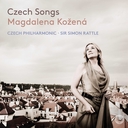
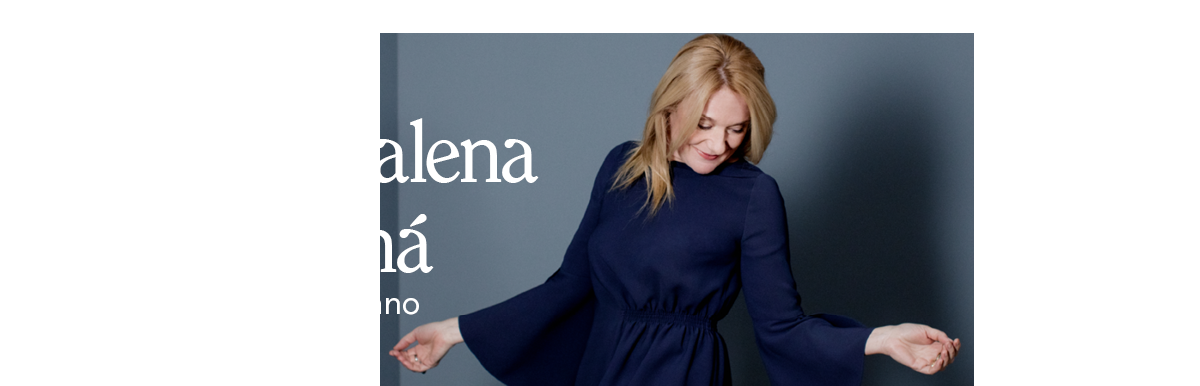
Musically speaking, he was splendidly rewarded. Kozena is one of those performers who makes singing seem like an entirely natural activity. She sings as if there is no artifice involved, as if the years of study and training have done nothing to reshape the singing voice she was born with.
She showed that natural ease of production and expression while delivering the potent expressiveness that is released through the balancing of stress and release in the vocal lines of Rameau and the evening’s other composer, Marc-Antoine Charpentier (1643-1704).
There was not much in the way of emotional lightness in the vocal items from Rameau’s Hippolyte et Aricie, Dardanus, Castor et Pollux and Les Indes galantes or Charpentier’s Medée. The texts spoke of cruelty, vengeance, lamentation, and the singing, weighed down by the tragedy, pierced the heart.
The lively and colourful instrumental numbers with their inventive orchestration did provide a welcome contrast. But the lingering darkness of the world of the voice was not fully lifted until the encores, through the joyous tilt of Handel’s Dopo notte and the beguiling bittersweetness of Monteverdi’s Sì dolce è il tormento. Anyone especially touched by the Monteverdi — which seemed to be most of the audience – can find a recording of it on Kozena’s 2010 Deutsche Grammophon collection, Love Letters, and it is also available on YouTube.